A First Encounter in Seoul
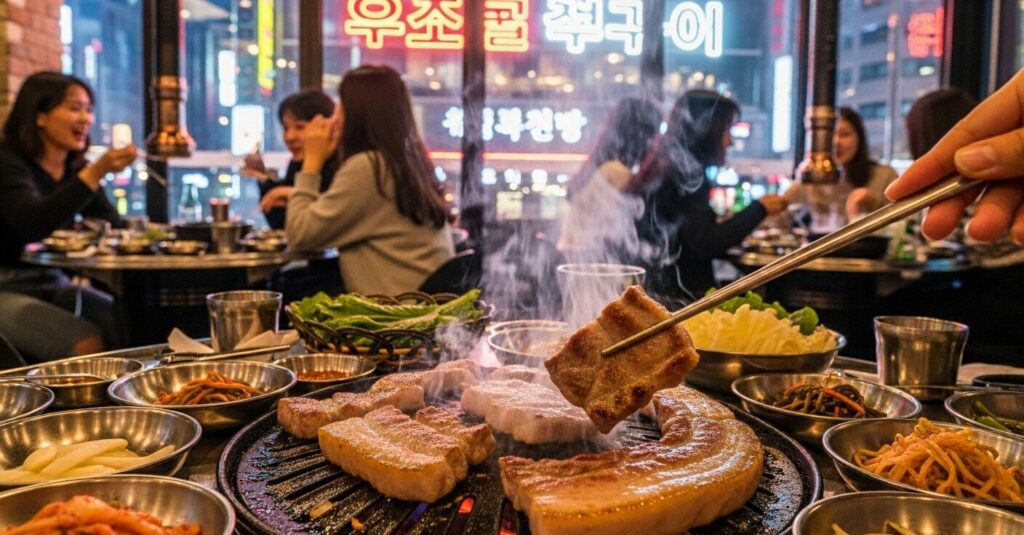
For many travelers, the first real introduction to Korean food culture happens at a bustling Samgyeopsal restaurant. Walking down the neon-lit streets of Seoul, the smoky aroma of sizzling pork belly draws you in before you even see the signboard. Inside, the atmosphere is electric: groups of friends huddle around tabletop grills, flipping thick slices of pork belly with tongs, while the sound of laughter mixes with the hiss of meat hitting hot metal. It feels less like dining out and more like stepping into a celebration. like joining a party.
The Ritual of the Grill
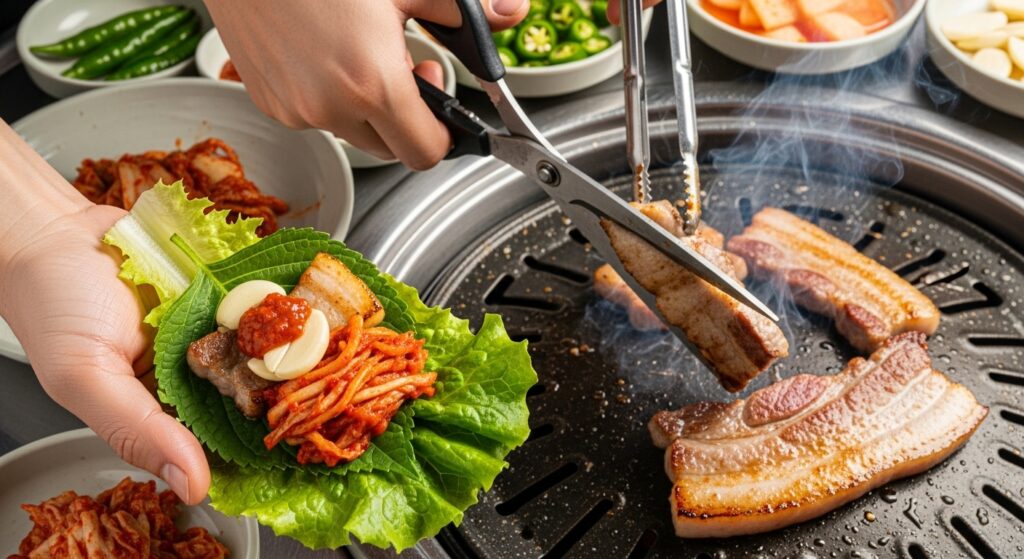
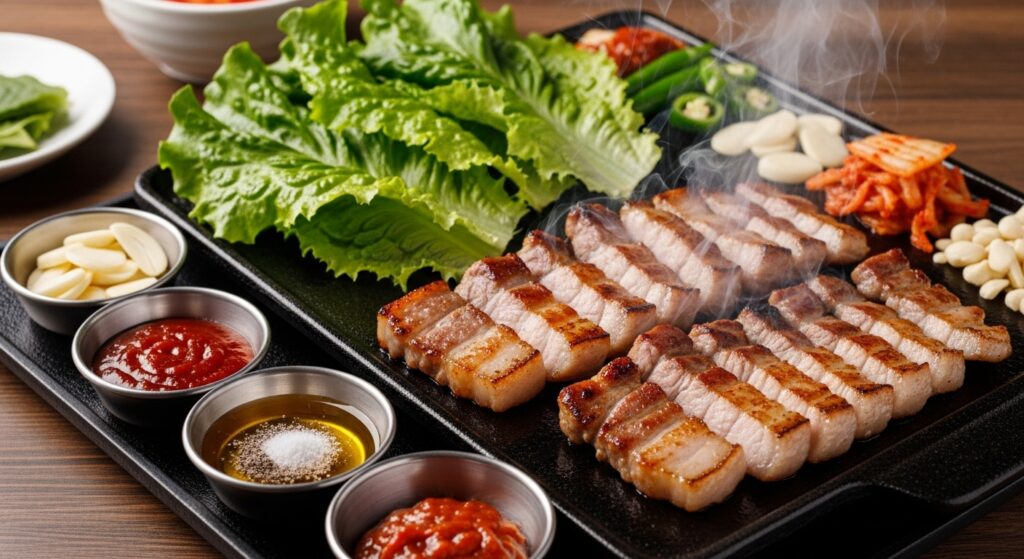
Samgyeopsal is not a meal where food simply arrives at your table, ready to eat. It is an interactive ritual. One person takes charge of grilling, another cuts the pork belly into bite-sized pieces with scissors, and others arrange side dishes or prepare lettuce wraps. Each wrap is different — some filled with garlic and spicy ssamjang, others with kimchi or even a slice of grilled mushroom.
What makes this ritual special is that everyone participates. Cooking becomes a shared activity, blurring the line between chef and diner. You might joke with your friends about who grilled the best piece of pork, or compete to see who can make the most creative wrap. The table itself becomes a stage for conversation, teamwork, and fun.
Samgyeopsal as a Window into Korean Life
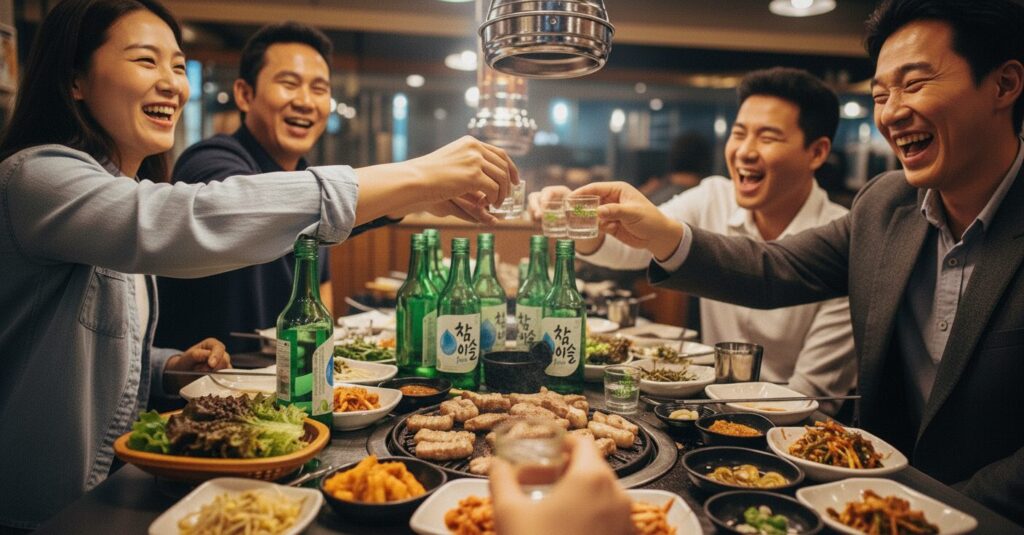
Beyond taste, Samgyeopsal offers a glimpse into Korean society. It is often the centerpiece of hoesik — company dinners where colleagues bond outside the office. Families gather around the grill on weekends, turning mealtime into a bonding ritual. For birthdays, reunions, or even casual weeknight dinners, Samgyeopsal provides comfort and togetherness.
For visitors, joining a Samgyeopsal dinner is like opening a window into everyday Korean life. Sitting with locals, sipping soju, and wrapping sizzling pork with crisp lettuce shows the cultural emphasis on sharing and hospitality. It’s a reminder that Korean dining is less about the food itself and more about the relationships built around the table.
A Global Favorite with Local Roots
Although deeply rooted in Korean tradition, Samgyeopsal has spread worldwide. Korean BBQ restaurants from Los Angeles to London now feature pork belly grilling as their star attraction. What makes it so appealing is the balance of simplicity and excitement: fresh meat, a hot grill, and the thrill of cooking together at the table.
In Korea, the dish has also evolved with modern trends. Cheese-covered Samgyeopsal became a sensation in nightlife districts, while spicy marinades and fusion sauces cater to younger diners. Some restaurants experiment with tortilla wraps or rice paper, showing that while Samgyeopsal adapts to new tastes, its core — grilling, wrapping, and sharing — never changes.
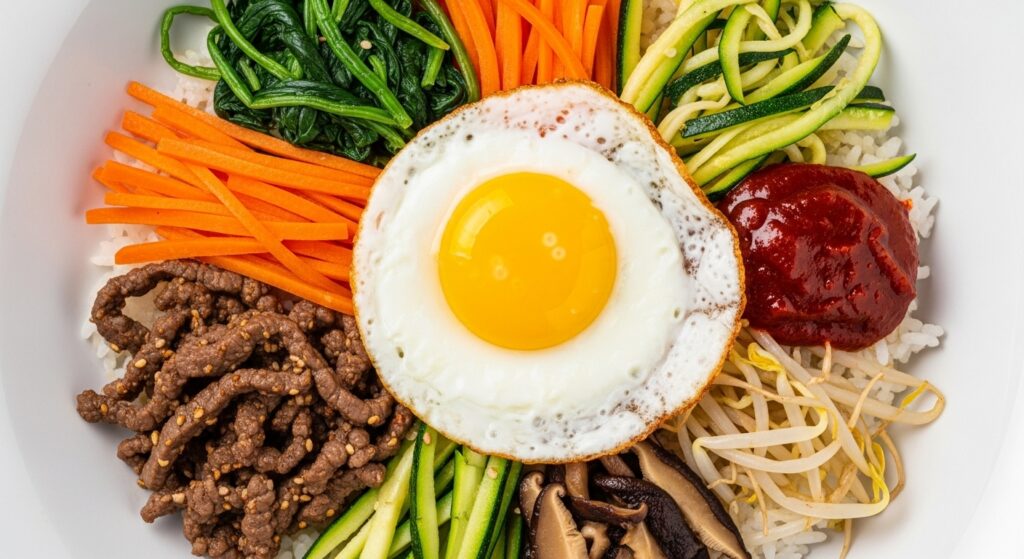
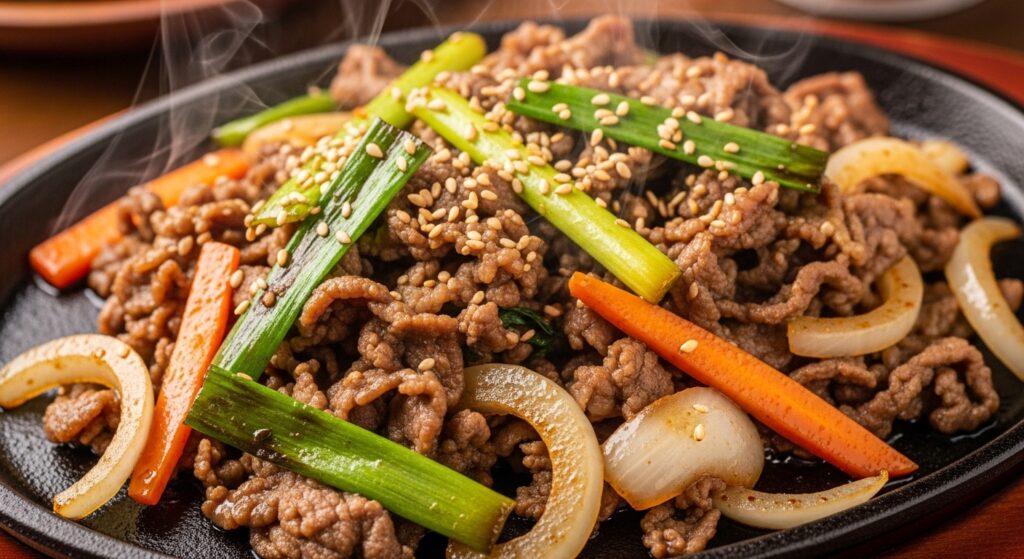
If you enjoy the smoky fun of Korean BBQ, don’t miss Bulgogi (Marinated Beef BBQ). Its sweet and savory soy-based marinade offers a softer, comforting flavor that perfectly complements grilled pork belly.
Health and Balance in Every Bite
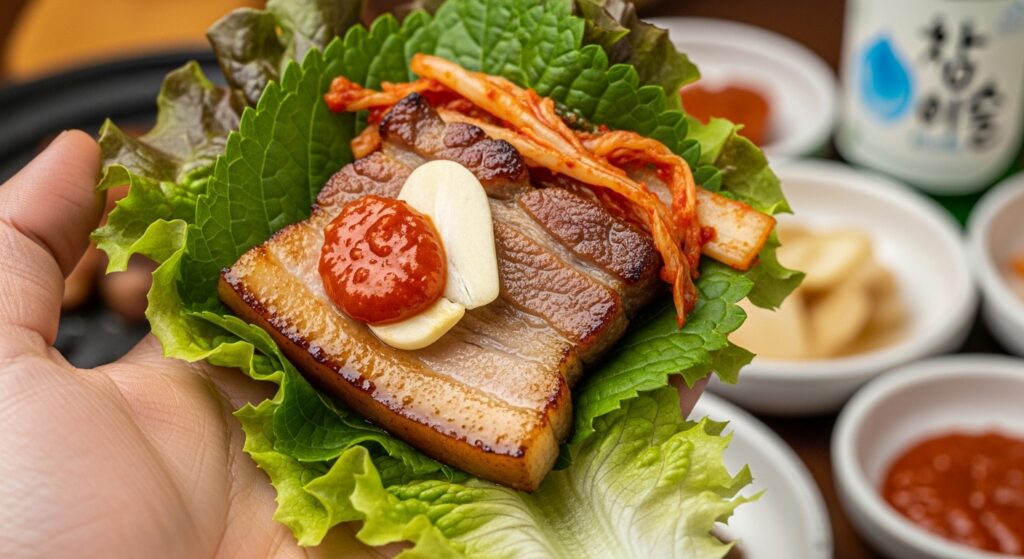
While pork belly is known for its richness, Koreans have long balanced it with an array of fresh vegetables. Each wrap typically includes lettuce, perilla leaves, raw garlic, chili peppers, and kimchi. These accompaniments not only brighten the flavors but also add fiber, vitamins, and probiotics, making the meal surprisingly balanced.
Side dishes, known as banchan, further enhance the nutritional value. Bean sprouts, seasoned spinach, pickled radish, and spicy kimchi all bring texture and freshness to the table. In recent years, healthier versions such as radish wraps or multi-grain lettuce have gained popularity, reflecting a growing interest in wellness without losing the joy of indulgence.
“After a hearty Korean BBQ, cool down with a glass of Sikhye (Sweet Rice Punch) — a classic finish to any feast.”
Conclusion
Samgyeopsal is more than grilled pork belly. It is an experience that embodies Korean hospitality, togetherness, and celebration. Whether enjoyed in a smoky Seoul restaurant, at a countryside family table, or in a Korean BBQ spot abroad, the sizzling sound and the act of wrapping meat with vegetables create lasting memories.
👉 For anyone seeking to understand Korea, eating Samgyeopsal is essential. It is not just about taste; it is about laughter, bonding, and the unique dining culture that makes Korea unforgettable.
Korean Samgyeopsal (Grilled Pork Belly BBQ)
Equipment
- 1 Grill pan or tabletop grill For cooking pork belly
- 1 Tongs For turning meat
- 1 Plates & bowls For lettuce, sauces, and side dishes
Ingredients
- 600 g Pork belly (samgyeopsal, thick slices) Main ingredient
- 1 head Lettuce leaves For wraps
- ½ bunch Perilla leaves (optional) For authentic wraps
- 3 cloves Garlic Sliced, grilled or raw
- 2 Green chili peppers Optional, for spice
- 1 bowl Steamed rice To serve
- Salt & pepper For seasoning
- Sesame oil with salt & pepper Dipping sauce
- Ssamjang (Korean dipping sauce) Soybean paste + chili paste mix
Instructions
- Preheat a grill pan or tabletop grill over medium-high heat.
- Place thick slices of pork belly on the grill without seasoning.
- Cook until golden brown and slightly crispy, turning occasionally with tongs.
- Grill garlic slices and green chili peppers on the side.
- Cut pork belly into bite-sized pieces with scissors.
- To eat, place pork in a lettuce leaf with garlic, chili, rice, and ssamjang. Wrap and enjoy!