A Drink That Ends a Feast

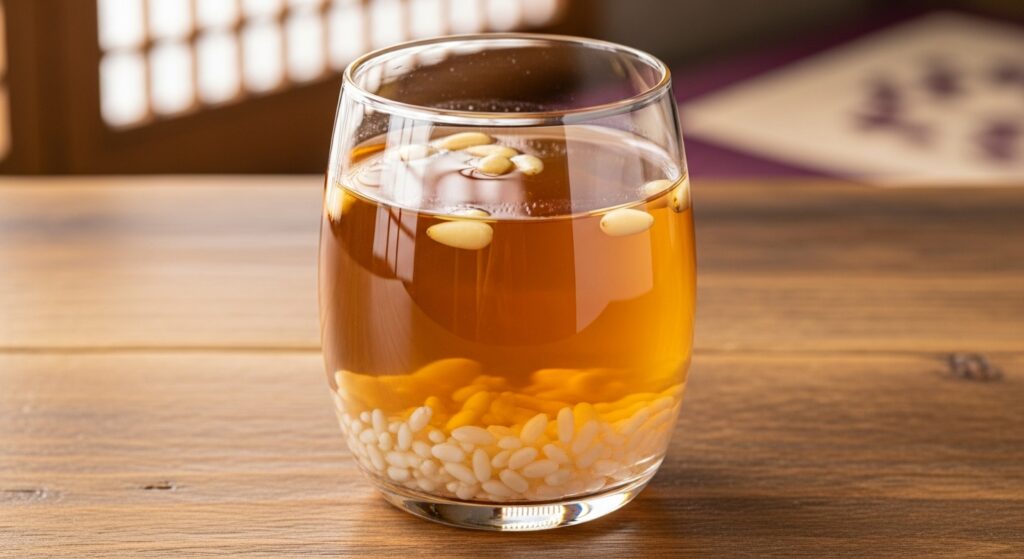
In Korea, a meal is not always finished with dessert. Instead, it may end with a glass of sikhye, a golden-colored sweet rice punch served cold. Foreigners who first try it are often surprised. It is light, refreshing, and slightly malty, with grains of rice floating inside the glass. Unlike sugary sodas or creamy desserts, sikhye feels natural and soothing, especially after a heavy or spicy Korean meal.
What makes sikhye truly fascinating, however, is its role in Korean celebrations. It is not just a drink — it is a tradition that has accompanied holidays, festivals, and family gatherings for centuries.
A Royal Beginning

Sikhye traces its history back to the royal courts of the Joseon dynasty. Served at banquets, it was valued as a palate cleanser and a gentle way to aid digestion. Over time, it spread from palaces to homes, becoming a staple during holidays like Seollal (Lunar New Year) and Chuseok (harvest festival).
For foreigners, it is striking to learn that a drink made from such simple ingredients — rice, malt, and sugar — could carry so much cultural weight. Sikhye is proof that even the humblest foods can hold deep meaning.
The Symbolism of Sikhye

In Korean tradition, sikhye symbolizes hospitality and renewal. Serving it to guests after a feast is a way of saying, “We want you to leave refreshed and satisfied.” During New Year gatherings, it represents a fresh start. At weddings or birthdays, it marks a sweet conclusion to moments of joy.
Foreigners often find this symbolism meaningful. A simple glass of sweet rice punch becomes a cultural experience, offering insight into the Korean values of sharing and community.
A Festive Drink for All Seasons
While sikhye is most closely tied to holidays, it is also enjoyed casually. In bustling traditional markets, vendors sell icy-cold sikhye in large metal containers, ladling it into cups for thirsty shoppers. In modern convenience stores, it appears in cans and bottles, making tradition as accessible as grabbing a quick snack.
For foreigners traveling in Korea, tasting sikhye can feel like stepping into the rhythm of everyday life. Whether at a family gathering, a wedding, or a street market, sikhye connects people across generations.
For a truly traditional pairing, enjoy it with Hotteok (Korean Sweet Pancakes) — the classic winter street treat that complements Sikhye’s cool sweetness with warm cinnamon flavor.
Global Comparisons
Foreigners often compare sikhye to drinks from their own cultures. Some liken it to Mexican horchata, while others say it reminds them of Japanese amazake. Yet sikhye is distinct — lighter than horchata, clearer than amazake, and uniquely Korean in its balance of sweetness and refreshment.
These comparisons help foreigners appreciate sikhye not only as a drink but as part of a broader global tradition of rice-based beverages.
And if you’re curious about another beloved Korean comfort food, try Pajeon (Korean Green Onion Pancake) — often enjoyed with makgeolli on rainy days, a savory companion to Sikhye’s sweet calm.
Try It at Home
The best part of sikhye is that it can be made at home. The process — fermenting malt water with cooked rice — takes patience, but the reward is worth it. Watching the rice grains float to the surface signals that the drink is ready.
👉 Curious? Scroll down to the recipe card below for instructions on how to prepare authentic sikhye at home. Even outside Korea, you can bring a taste of its holiday spirit into your kitchen.
Conclusion
Sikhye is more than just a sweet drink. It is a cultural tradition, a symbol of celebration, and a reminder of hospitality. For foreigners, tasting sikhye is a way to understand Korean life beyond barbecue and kimchi — it shows how even something as simple as rice and water can become a meaningful part of holidays and gatherings.
Whether enjoyed at a royal banquet centuries ago or in a convenience store today, sikhye continues to refresh and connect people. It proves that in Korean culture, food and drink are never just about taste — they are about history, values, and togetherness.

Sikhye (Korean Sweet Rice Punch)
Equipment
- 1 Large pot or rice cooker For making rice and fermenting
- 1 Fine strainer To separate malt water
- 1 Pitcher or jar For storing drink
Ingredients
- 1 cup Cooked rice Short-grain, freshly steamed
- 1 cup Barley malt powder (yeotgireum) For enzyme water
- 8 cups Water For making drink
- ½ cup Sugar Adjust to taste
- Pine nuts Optional garnish
Instructions
- Mix barley malt powder with 4 cups of warm water. Let sit for 30 minutes, then strain liquid through a fine sieve. Discard solids.
- Place cooked rice in a large pot or rice cooker. Pour strained malt water over the rice. Keep warm (around 60°C / 140°F) for 4–6 hours until some rice grains float.
- Strain liquid into a pot, leaving rice aside.
- Add 4 more cups of water and sugar. Simmer for 10 minutes, then cool completely.
- Chill in the refrigerator before serving.
- To serve, pour into a glass with a spoonful of rice grains and garnish with pine nuts.