A Rainy-Day Favorite
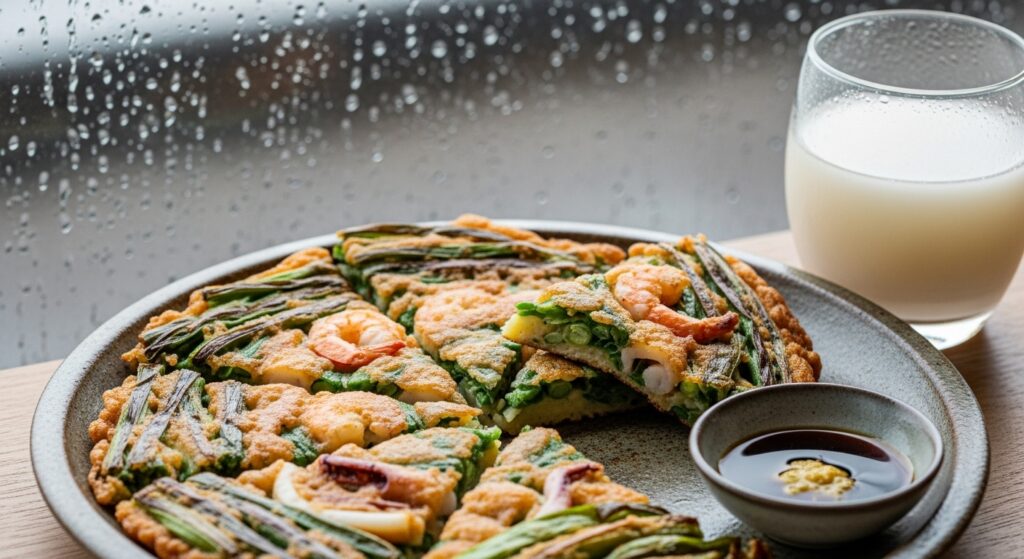
For many Koreans, the sound of rain hitting the window instantly sparks a craving for pajeon and a glass of makgeolli, Korea’s traditional rice wine. Foreigners may find this pairing unusual, but in Korea it is a beloved ritual. The crispy pancake, filled with fresh green onions, seafood, or vegetables, seems to taste even better when enjoyed while listening to raindrops outside. Some say it’s because the crackling sound of frying batter resembles the sound of rain — a sensory connection that has turned pajeon into a rainy-day tradition.
First Impressions for Foreigners
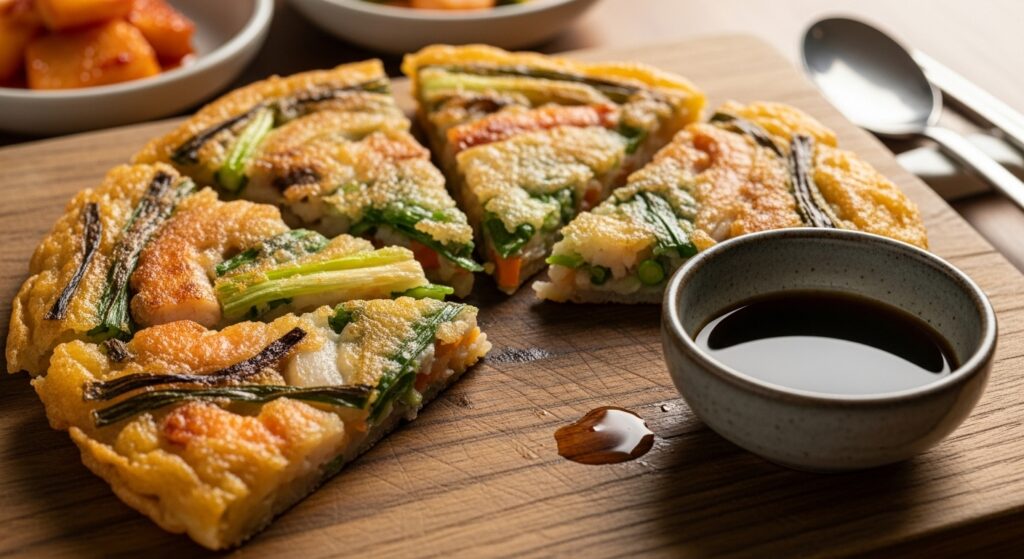
Imagine walking into a Korean restaurant and seeing a golden, crispy pancake being carried to a table. At first glance, it may look like a familiar Western dish, such as a frittata or crepe. But the moment you take your first bite, you realize how unique pajeon is. The crunch of the fried edges, the slight chew of the scallions, and the savory dipping sauce create an experience that feels both comforting and exciting.
For foreigners, pajeon offers a gentle introduction to Korean flavors. It’s not as spicy as kimchi jjigae or as bold as bulgogi, but it still carries the depth of Korean cuisine. That balance makes it one of the easiest Korean dishes for newcomers to enjoy.
A Dish for Sharing
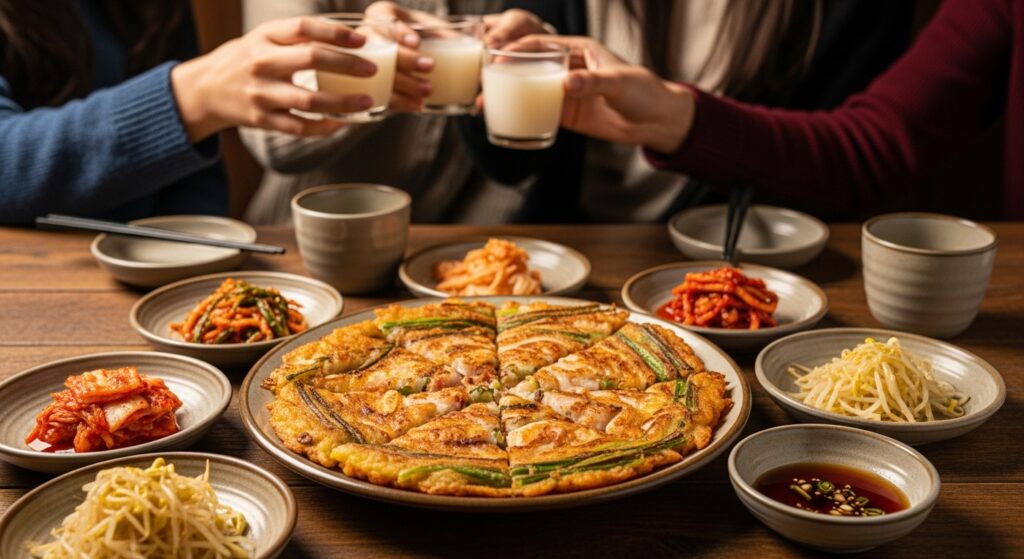
Pajeon is rarely eaten alone. It is placed in the center of the table, cut into slices, and shared with everyone. This reflects the Korean way of dining, where meals are about community rather than individual plates. Foreigners who are used to ordering their own dish may be surprised at first, but soon realize that sharing creates a warm, connected atmosphere.
The dish also adapts to different occasions. At a casual pub, it might come with squid or seafood for a heartier snack. At home, families may prepare a simple scallion-only version. Each variation shows the flexibility of pajeon as both comfort food and party food.
“Crispy pancakes and a refreshing salad are a great combo — try my Oi-muchim (Spicy Cucumber Salad) next.”
A Story of Tradition and Creativity
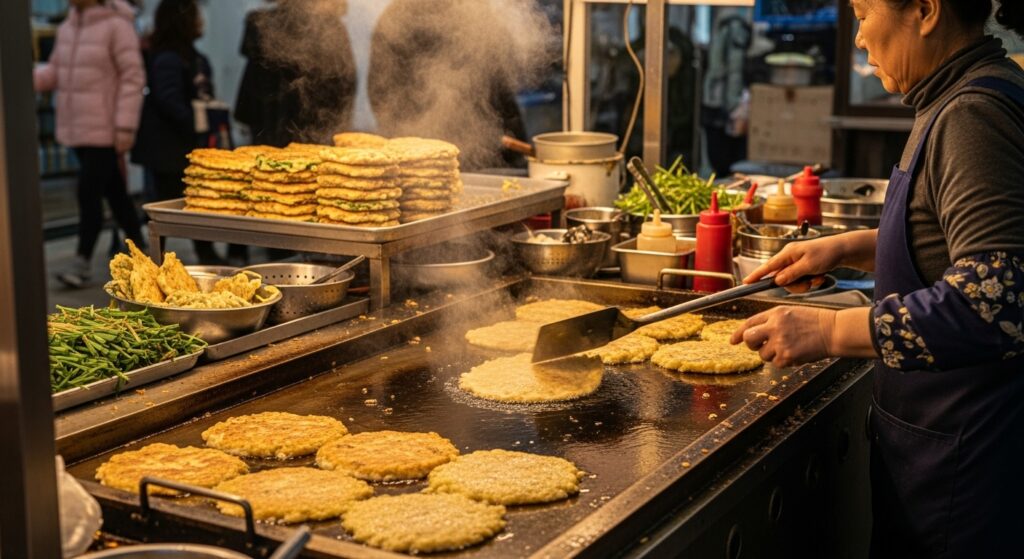
Pajeon has deep cultural roots. Historically, pancakes made from flour and vegetables were simple foods prepared during times of limited resources. Over time, Koreans transformed this humble dish into something celebratory. Today, you’ll find endless variations: kimchi pajeon, seafood pajeon, or even fusion versions with cheese or bacon.
For foreigners, this creativity is fascinating because it shows how Korean cuisine constantly evolves. It honors tradition while embracing modern twists, making every encounter with pajeon slightly different.
If you enjoy crispy, savory Korean dishes, try Korean Fried Chicken (Crispy, Sweet & Spicy) next — another classic that turns simple ingredients into unforgettable comfort food.
Beyond Taste – An Experience
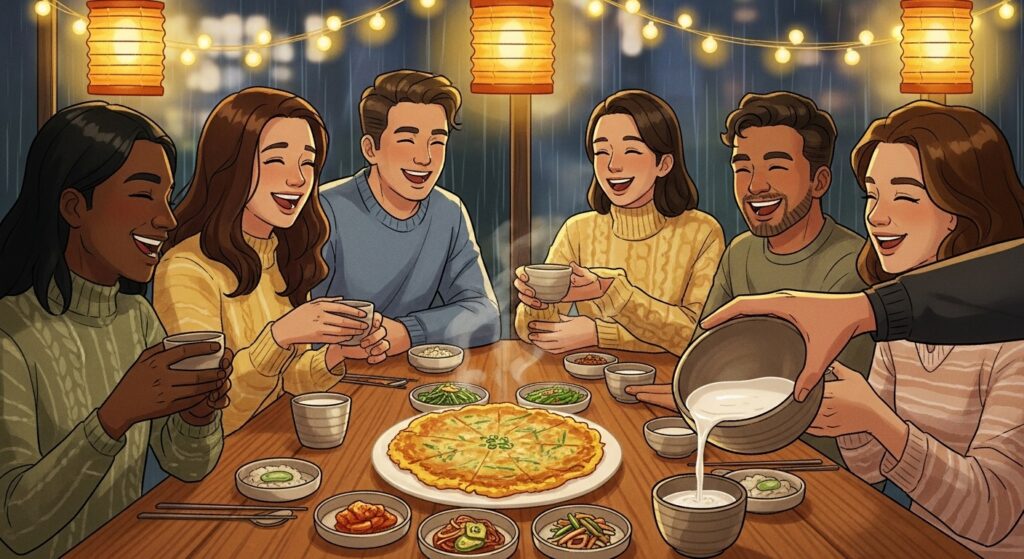
What makes pajeon memorable for foreigners is not just the flavor but the atmosphere that surrounds it. Eating pajeon on a rainy day, with friends gathered around and makgeolli glasses being filled, feels like stepping into an authentic slice of Korean life. It’s not simply food — it’s an experience of sound, smell, taste, and companionship.
And the best part? You don’t have to be in Korea to enjoy it. With just a few simple ingredients, you can recreate the experience at home. The recipe is surprisingly approachable, requiring only flour, scallions, water, and a hot pan. If you’re curious to try, check the recipe card below for step-by-step instructions.
Conclusion
Pajeon is more than a pancake — it is a cultural symbol of sharing, comfort, and tradition. For foreigners exploring Korean cuisine, it offers a delicious entry point that is both familiar and new. Whether you eat it on a rainy evening in Seoul or cook it at home with the recipe provided below, pajeon has a way of turning a simple meal into a meaningful moment.
👉 Next time the rain falls, remember the Korean tradition: pour a glass of makgeolli, fry up some pajeon, and enjoy the cozy comfort that Koreans have cherished for generations.

Pajeon (Korean Green Onion Pancake)
Equipment
- 1 Mixing bowl For batter
- 1 Frying pan For cooking pancake
- 1 Spatula For flipping
Ingredients
For pancake:
- 1 bunch Green onions (scallions) Cut into 2–3 inch lengths
- 1 cup All-purpose flour Base for batter
- ½ cup Rice flour (optional) Extra crispiness
- 1 cup Cold water Adjust consistency
- 1 Egg Mixed into batter
- Oil for frying Enough to coat pan
For dipping sauce:
- 2 tbsp Soy sauce Base flavor
- 1 tbsp Vinegar Tanginess
- 1 tsp Sesame oil Aroma
- 1 tsp Sesame seeds Garnish
- Red pepper flakes or sliced chili Optional, for spice
Instructions
- In a mixing bowl, combine flour, rice flour, egg, and cold water. Mix until smooth batter forms.
- Heat oil in a frying pan over medium-high heat.
- Place scallions in the pan, spreading them evenly.
- Pour batter over the scallions, tilting the pan to cover them.
- Cook until the bottom is golden brown and crispy (about 4–5 minutes).
- Flip carefully and cook the other side until golden.
- Remove, cut into slices, and serve with dipping sauce.