A Stew That Smells Like Home
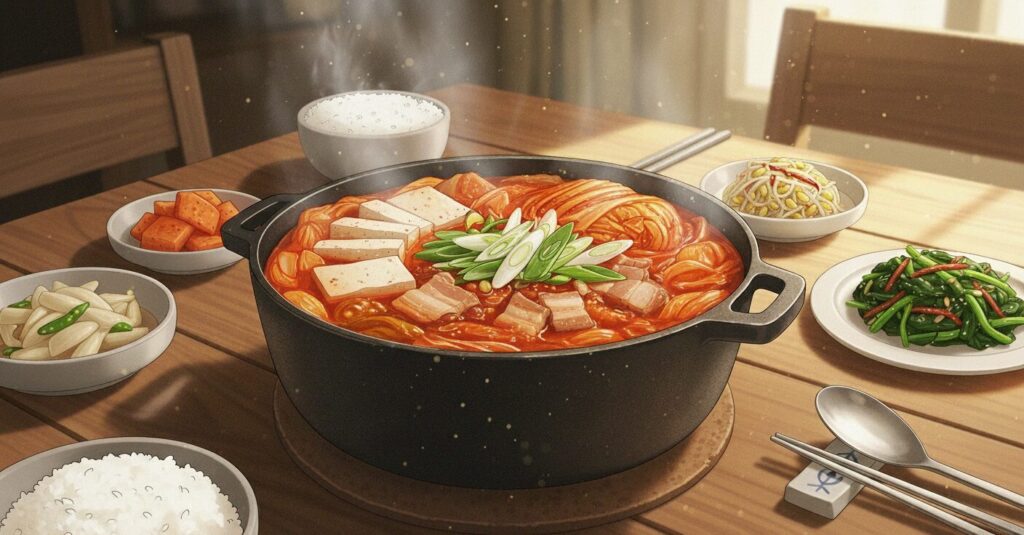
For many Koreans, the smell of simmering kimchi jjigae is the smell of home. The bubbling red broth, the sharp aroma of aged kimchi, and the comforting warmth of a steaming bowl have made this dish a national favorite. For foreigners, kimchi jjigae might seem bold and even intimidating at first glance. Spicy, pungent, and deeply flavorful, it is not a stew that hides its character. Yet once you taste it, you begin to understand why it is often described as the ultimate Korean comfort food.
For another beloved Korean stew that captures the warmth of home, try Doenjang-jjigae (Korean Soybean Paste Stew). Its earthy aroma and mellow flavor offer a comforting balance to the bold spice of Kimchi Jjigae.
First Impressions as a Foreigner

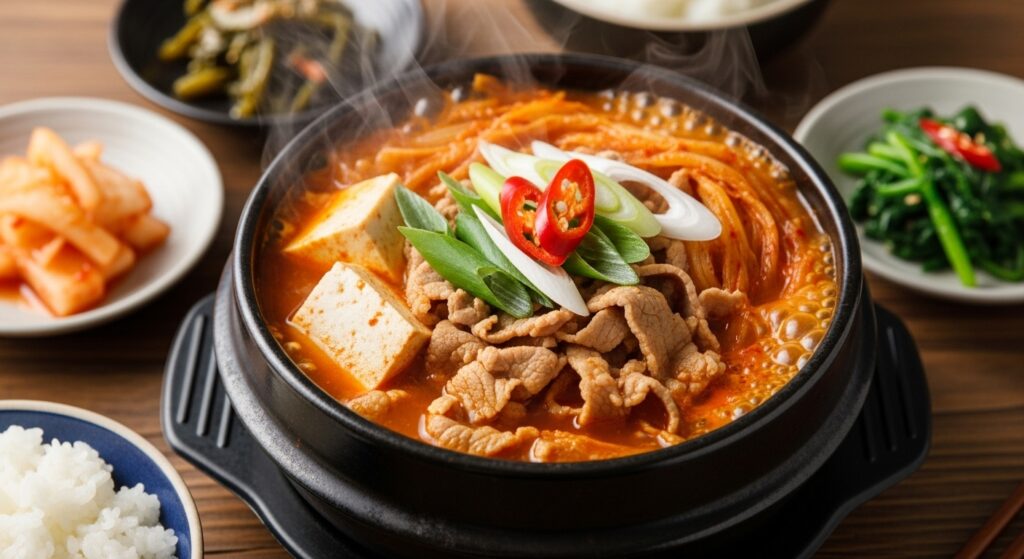
Imagine walking into a Korean restaurant on a chilly evening. The server places a pot of kimchi jjigae on the table, still boiling furiously. Inside you see soft tofu, slices of pork, mushrooms, and of course, chunks of kimchi floating in a red broth. The heat rising from the pot warms your face, while the scent of garlic and chili awakens your appetite.
At first, you might wonder if it’s too spicy, too sour, or too strong. But with the first spoonful, the flavors come together: spicy but not overwhelming, sour yet refreshing, and rich from the pork broth. Foreigners often find that kimchi jjigae tastes surprisingly balanced — bold but comforting at the same time.
A Window Into Everyday Korean Life
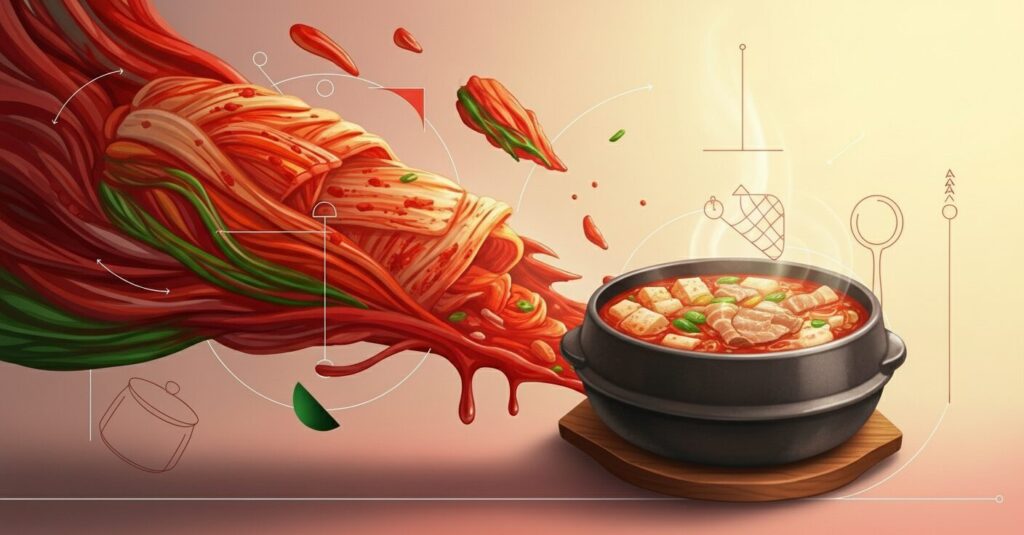
Unlike dishes that are reserved for celebrations, kimchi jjigae is part of daily life in Korea. It is inexpensive, quick to make, and endlessly adaptable. Families often use leftover kimchi that has fermented too long to eat fresh. Instead of wasting it, they transform it into a stew that tastes even better the more sour the kimchi is. This practice reflects an important part of Korean culture: resourcefulness and the ability to turn humble ingredients into something extraordinary.
For foreigners living in Korea, learning to cook kimchi jjigae is often their first step into Korean home cooking. It is a dish that requires no fancy skills — just patience and a willingness to embrace the strong flavors of kimchi.
A Stew With Many Faces
Kimchi jjigae is not just one dish; it has countless variations. Some prefer pork belly for richness, while others use canned tuna for a lighter taste. Vegetarian versions skip the meat entirely and focus on mushrooms and tofu. In the cold winter months, many Koreans add extra tofu and broth to make the stew more filling.
For foreigners, these variations are both surprising and exciting. It shows that kimchi jjigae is not a rigid recipe but a flexible tradition. Each family has its own version, passed down and slightly altered over time. Tasting different versions of the stew in different homes and restaurants can feel like a culinary journey through Korea itself.
The Global Appeal of Kimchi Jjigae
As Korean food spreads worldwide, kimchi jjigae has become a gateway dish for many foreigners. It appears on menus in Korean restaurants in New York, London, and Sydney, often recommended as the perfect introduction to Korean comfort food. Paired with a bowl of steamed rice, it feels nourishing and satisfying in a way that transcends cultural boundaries.
Foreigners who try it often remark on how different it feels compared to Western stews. Where Western comfort foods may rely on cream, butter, or mild flavors, kimchi jjigae is unapologetically bold. Yet, its warmth and heartiness resonate universally.
Conclusion
For foreigners, kimchi jjigae is more than just a spicy Korean dish. It is an entry point into understanding Korean culture — a dish that reveals how Koreans value family, tradition, and comfort in everyday life. From the first spicy spoonful to the last bite of rice soaked in broth, kimchi jjigae tells a story of resilience, creativity, and warmth.
👉 So if you are curious about Korean food, don’t stop at barbecue or fried chicken. Order a bubbling pot of kimchi jjigae, and you will taste not only kimchi but also the heart of Korea itself.
“If you enjoy rich, spicy stews, don’t miss my Sundubu-jjigae (Soft Tofu Stew) — another warm and comforting Korean soup.”
Kimchi Jjigae (Korean Kimchi Stew)
Equipment
- 1 Medium pot or stone pot For cooking the stew
- 1 Knife & cutting board For slicing ingredients
- 1 Ladle For serving
Ingredients
- 2 cups Aged kimchi The more fermented, the better
- 150 g Pork belly or shoulder Cut into bite-sized pieces
- ½ Onion Sliced
- 1 Green onion Sliced for garnish
- ½ block Tofu Cut into cubes
- 2 cups Water or anchovy stock Base for broth
- 1 tbsp Gochugaru (Korean chili flakes) Adjust to spice level
- 1 tbsp Gochujang (Korean chili paste) Depth of flavor
- 1 tbsp Soy sauce Seasoning
- 1 tsp Minced garlic Flavor
- Sesame oil Small drizzle
- Salt & pepper To taste
Instructions
- Heat a pot over medium heat and add pork belly. Stir-fry until lightly browned.
- Add chopped kimchi and cook together for 3–4 minutes.
- Stir in gochugaru, gochujang, garlic, and soy sauce. Mix well.
- Pour in water or anchovy stock. Bring to a boil, then reduce to a simmer.
- Add onion slices and cook for 15 minutes until flavors meld.
- Add tofu cubes and simmer for another 5 minutes.
- Drizzle sesame oil, garnish with green onion, and serve hot with steamed rice.