A Bite of Winter on the Streets of Korea
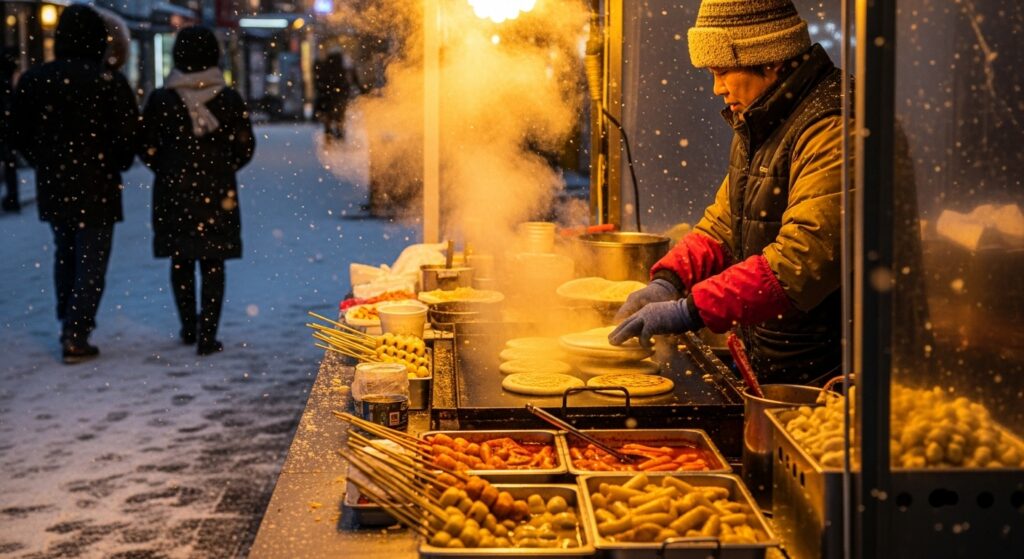
Hotteok, the famous Korean sweet pancake, is one of the most beloved winter street foods in Korea. If you visit Korea in winter, chances are you’ll come across the smell of sizzling sugar and cinnamon drifting through the cold air. That scent leads you to a small street cart where a vendor presses dough on a hot griddle. Within minutes, you’re handed a steaming pancake filled with molten brown sugar, cinnamon, and nuts. This is Hotteok, one of Korea’s most beloved winter street foods.
For foreigners, the first encounter is unforgettable. The outside is golden and crispy, while the inside bursts with gooey sweetness. It’s the kind of treat that makes you pause on a chilly evening, warming both your hands and your heart.
More Than Just a Snack
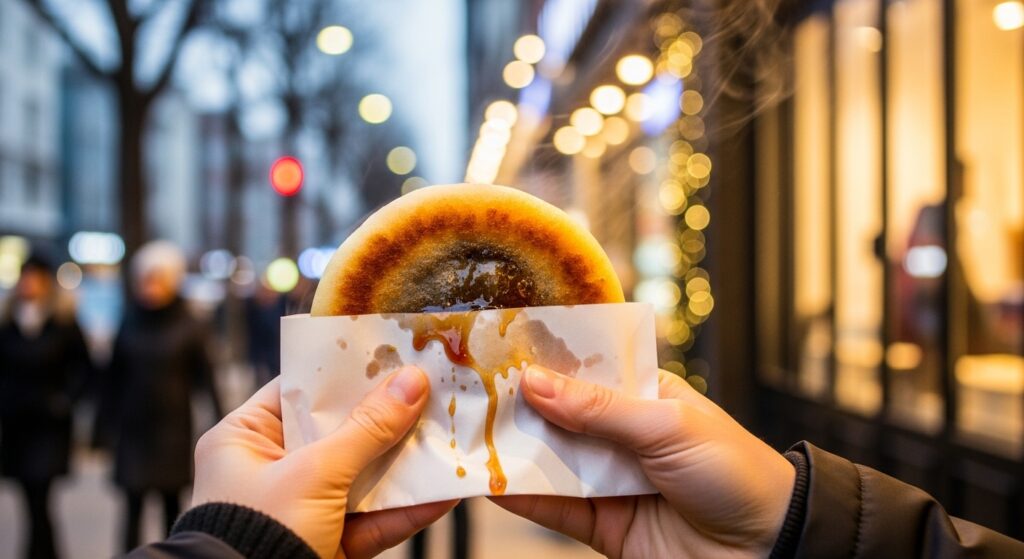
While it may look like a simple pancake, Hotteok carries cultural meaning. It first appeared in Korea in the early 20th century, influenced by Chinese merchants. Over time, it evolved into a distinctly Korean treat, now associated with winter markets and cozy moments. For locals, Hotteok is tied to childhood memories — stopping at a street stall after school, or warming up during a snowy evening.
Foreigners often find it fascinating that a snack so humble has such strong nostalgic power. Eating Hotteok is not just about satisfying a sweet tooth; it’s about sharing in a tradition that Koreans have cherished for generations.
The Street Food Experience
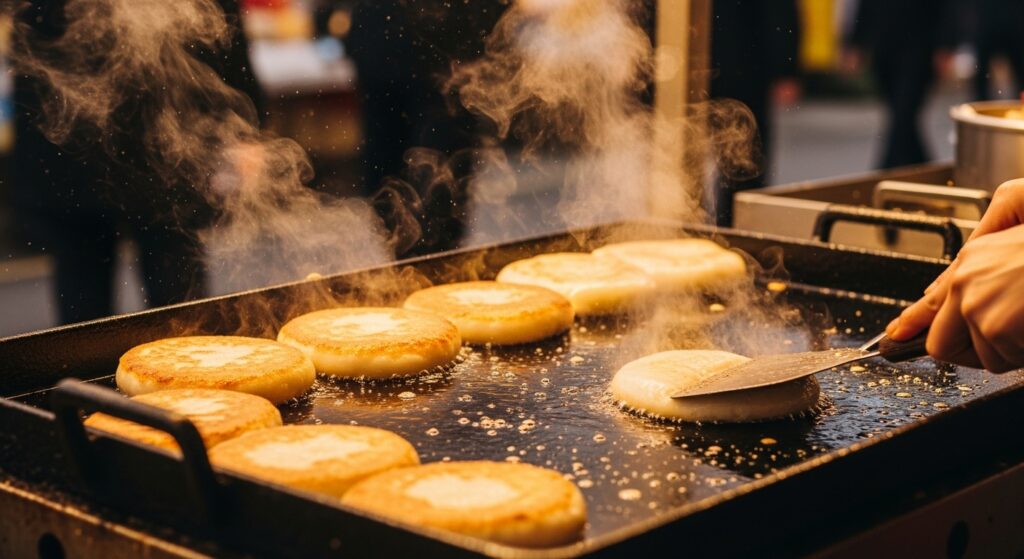
One of the joys of trying Hotteok as a foreigner is the atmosphere around it. You rarely eat it at a sit-down restaurant. Instead, you join a line at a bustling street corner, watch the vendor flatten dough balls on a sizzling griddle, and eagerly wait for your turn. The moment you bite into the pancake, the hot syrup nearly burns your tongue, but that’s part of the charm.
This street food culture itself is part of the appeal. For many travelers, tasting Hotteok becomes more than just eating — it becomes a story to tell, a memory of walking through crowded markets, snowflakes in the air, and warm sweetness in your hands.
Endless Variations
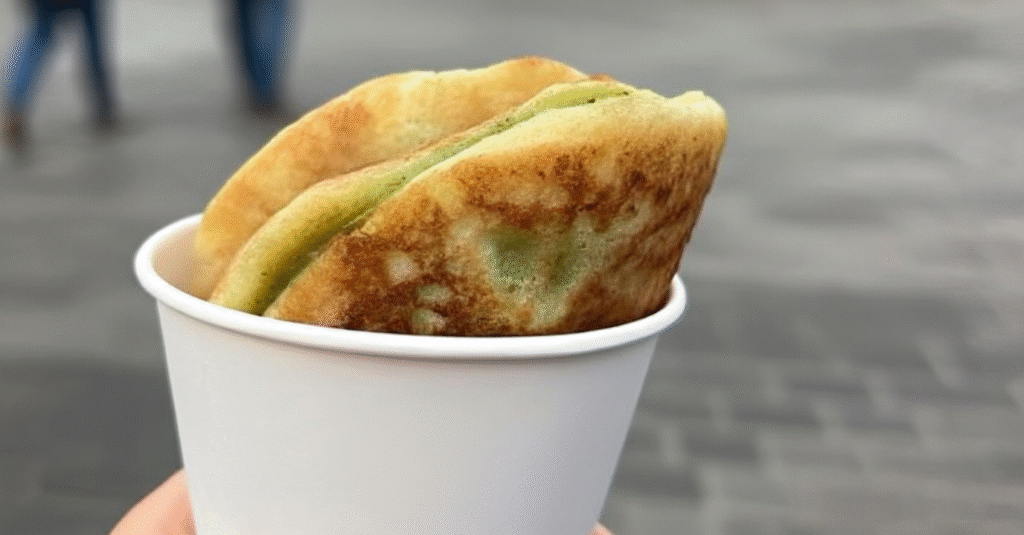
Foreigners are often surprised to learn that Hotteok is not limited to the classic cinnamon-sugar filling. Modern versions include green tea cream, red bean paste, honey, chocolate, or even savory options like cheese and vegetables. These variations show how Korean food embraces creativity while keeping its traditional roots.
Trying different kinds of Hotteok can feel like exploring Korea itself — traditional versus modern, sweet versus savory, simple versus experimental. Each bite is a reminder that even street food can evolve with time.
Why Hotteok Appeals to Foreigners
There are a few reasons why foreigners fall in love with Hotteok:
- It’s approachable. Unlike heavily spiced dishes, Hotteok’s sweet flavor feels familiar, yet unique.
- It’s seasonal. Eating it in the cold winter makes the experience special.
- It’s affordable. For just a couple of dollars, you get a treat and a cultural moment.
- It’s interactive. Watching it being made is part of the fun.
These qualities make Hotteok a perfect entry point into Korean street food culture.
Bringing Hotteok Home
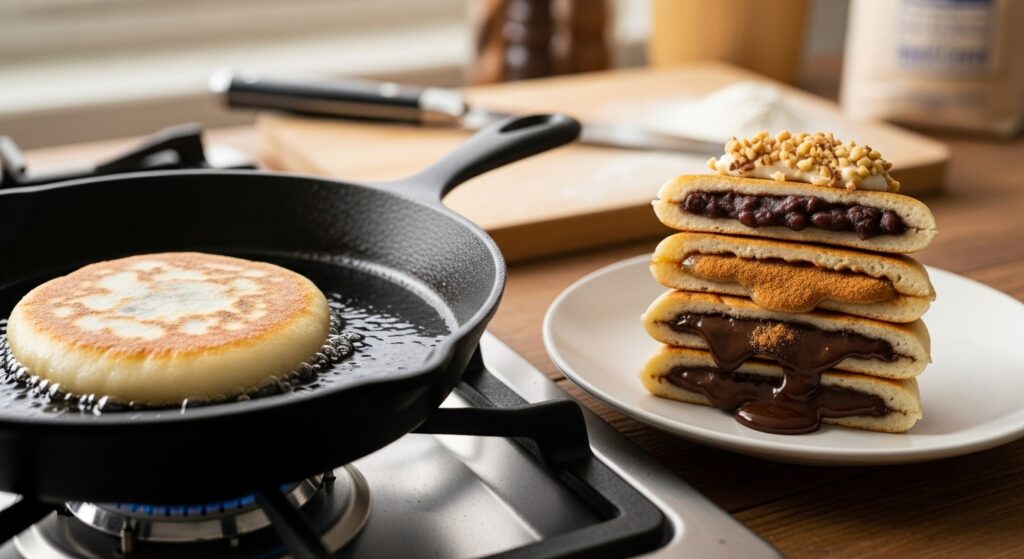
The good news is, you don’t have to wait for winter in Seoul to enjoy Hotteok. With a few ingredients — flour, sugar, cinnamon, and nuts — you can recreate it in your own kitchen. While it may be hard to capture the magic of a Korean street corner, the taste will still transport you there. If you’re curious, check the recipe card below for step-by-step instructions.
And for another traditional Korean sweet experience, try Sikhye (Korean Sweet Rice Punch) — a cool, golden drink often served after winter feasts, perfectly balancing Hotteok’s warmth with refreshing sweetness.
“If you love sweet Korean street treats, enjoy them with a glass of Homemade Strawberry Milk — pure comfort in every sip.”
Conclusion
Hotteok is more than just a sweet pancake. For Koreans, it is a nostalgic winter snack. For foreigners, it is a delicious discovery and a chance to experience the joy of Korean street food. Whether you try it at a market stall on a snowy evening or make it at home, Hotteok delivers comfort, sweetness, and a taste of Korea’s vibrant street culture.
👉 So next time winter comes, wrap your hands around a warm Hotteok, take a bite, and understand why this simple pancake is a cherished part of Korean life.
Hotteok (Korean Sweet Pancakes)
Equipment
- 1 Mixing bowl For dough
- 1 Frying pan For cooking
- 1 Spatula For pressing pancakes
Ingredients
For the dough:
- 2 cups All-purpose flour Base for dough
- 2 tbsp Sugar Sweetness
- 1 tsp Salt Flavor balance
- 2 tsp Instant yeast For fermentation
- 1 cup Warm water or milk To activate yeast
For the filling:
- ½ cup Brown sugar Main filling
- 2 tbsp Chopped walnuts or peanuts Crunch
- 1 tsp Cinnamon powder Flavor
- 1 tbsp Sesame seeds Optional
For cooking:
- Oil For frying
Instructions
- In a mixing bowl, combine warm water (or milk), yeast, sugar, and salt. Let sit until foamy.
- Add flour and mix into a sticky dough. Cover and let rise for 1 hour.
- Prepare filling: mix brown sugar, nuts, cinnamon, and sesame seeds.
- Divide dough into 6 portions. Flatten each piece and place 1–2 tbsp of filling in the center. Seal edges.
- Heat oil in a frying pan over medium heat.
- Place dough balls in the pan, seam side down. Press gently with a spatula.
- Cook until golden brown and crispy on both sides, with filling melted inside.
- Serve hot and enjoy the gooey, sweet center.