The First Encounter
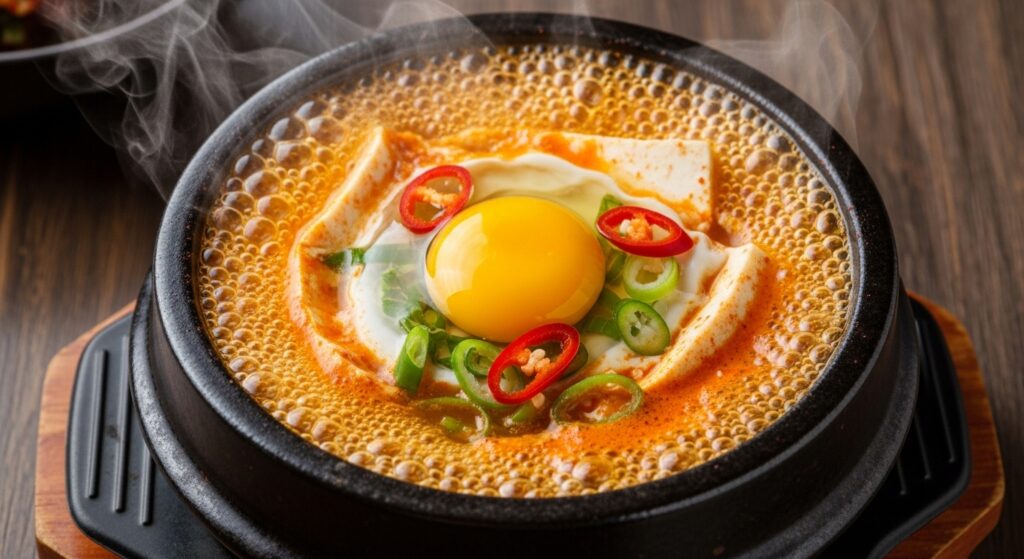
For many foreigners, the first time seeing sundubu jjigae is unforgettable. A small black stone pot arrives at the table, bubbling furiously as steam rises into the air. The broth is a deep, fiery red, and the aroma of chili, garlic, and sesame oil immediately hits your senses. Inside, soft tofu floats like white clouds in the spicy sea, joined by vegetables, seafood, or bits of pork.
The moment you take your first spoonful, you realize this stew is not just about taste — it’s an experience. The heat, both from the temperature and the spice, shocks your palate, while the silky tofu melts smoothly on your tongue.
A Feast for the Senses
Sundubu jjigae is one of the most sensory-rich dishes in Korean cuisine. It hisses and bubbles in front of you, making you lean closer in anticipation. The vivid red color of the broth signals boldness, while the soft texture of tofu provides a comforting contrast. Even the sound matters — the bubbling stew feels alive, as if inviting you to dive in.
For foreigners, this intensity can be surprising. Many are used to soups being mild, but sundubu jjigae is unapologetically bold. It demands your attention, not just as food but as a full sensory experience.
The Comfort of Contrast
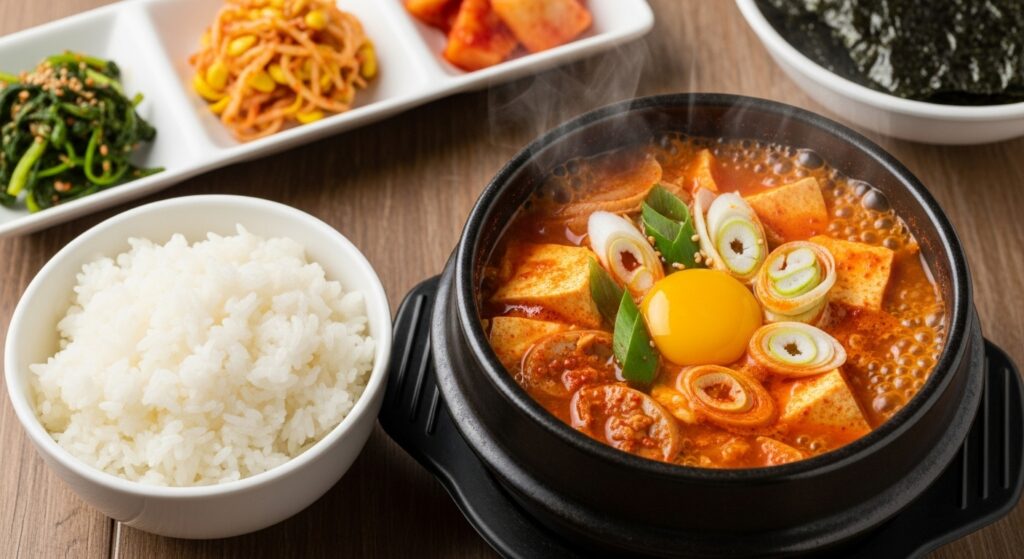
What makes sundubu jjigae fascinating is the balance between extremes. The broth is spicy and fiery, yet the tofu is soft and soothing. The stew is hot and bubbling, but when paired with a cool bowl of white rice, the flavors calm down. This contrast creates harmony, showing how Korean cuisine often balances heat with comfort.
Foreigners often describe the dish as “spicy comfort food” — a phrase that seems contradictory but makes perfect sense after a single bite.
A Foreign Favorite
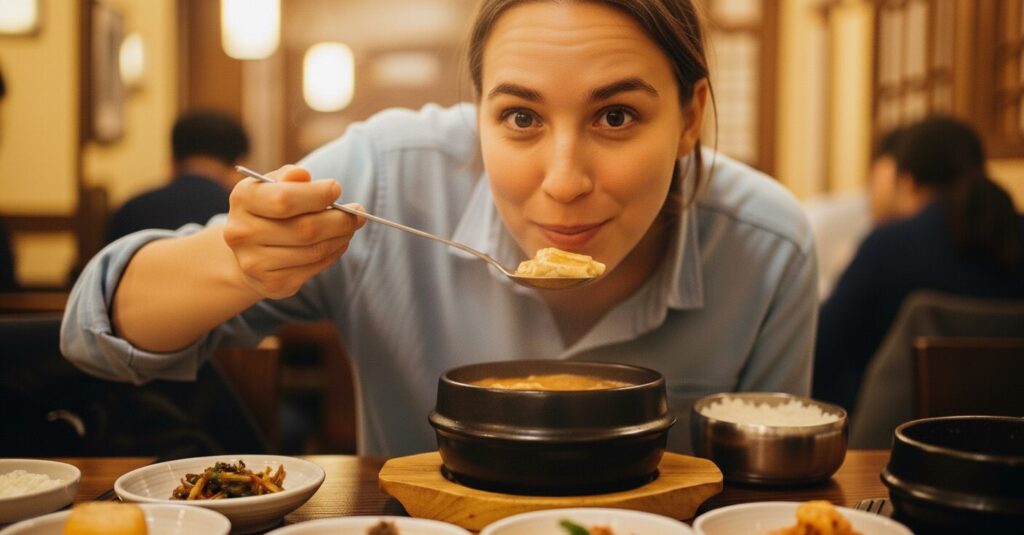
Among the many Korean stews, sundubu jjigae is often one of the easiest for foreigners to fall in love with. Unlike complex dishes that may require an acquired taste, this stew is straightforward: spicy, hearty, and deeply satisfying. The silky tofu adds a texture that is new for many foreigners, making the dish feel unique and memorable.
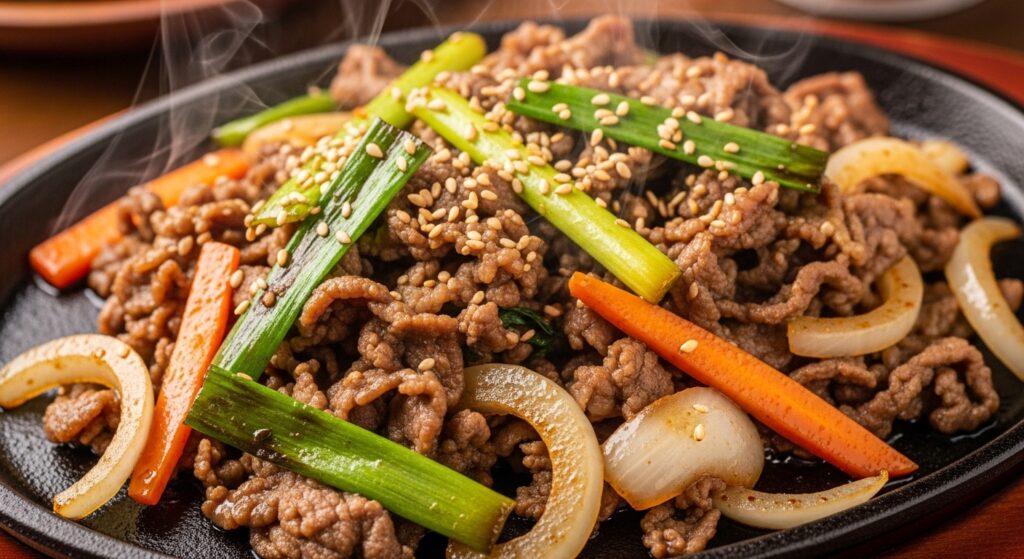
It has become a favorite menu item in Korean restaurants abroad. For many, trying sundubu jjigae becomes part of their introduction to Korean cuisine, often alongside dishes like kimchi jjigae or bulgogi.
If you enjoy the bold yet comforting taste of this stew, you’ll also love Kimchi-jjigae (Korean Kimchi Stew). Together, they represent the heart of Korean comfort food — spicy, warming, and deeply satisfying.
Health in a Bowl

Beyond the sensory thrill, sundubu jjigae also offers nutritional benefits. Tofu provides plant-based protein and is low in calories, while garlic, chili, and vegetables add antioxidants and vitamins. Foreigners interested in healthy eating often appreciate that this indulgent-tasting stew can also be part of a balanced diet.
Vegetarian or seafood versions also make the dish versatile, appealing to a wide range of dietary preferences.
The Dining Experience
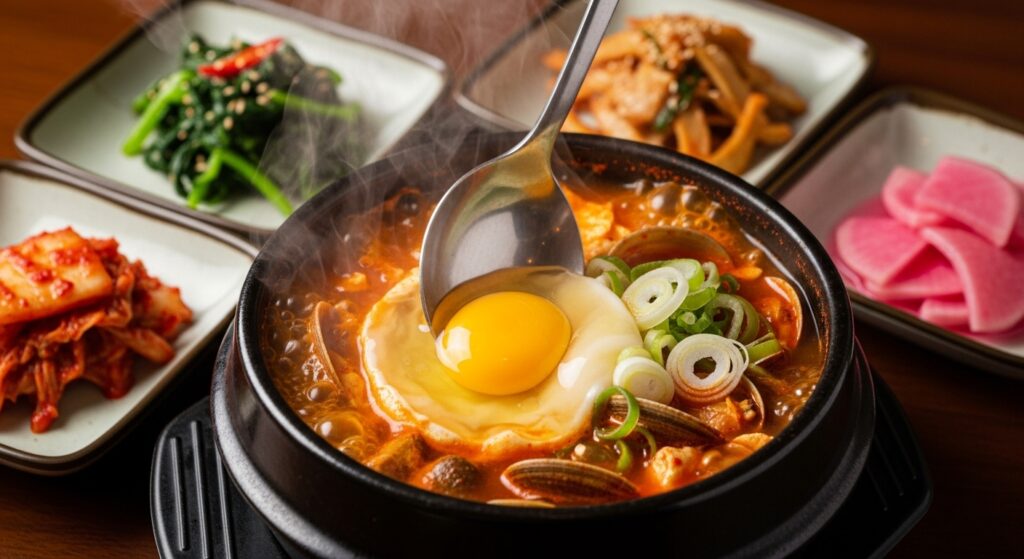
Eating sundubu jjigae in Korea adds another layer of authenticity. In many restaurants, the stew is served still bubbling, with a raw egg cracked in at the last moment. Diners stir the egg into the broth, adding richness and depth. Paired with side dishes (banchan) like kimchi, pickled radish, or seasoned spinach, the meal feels complete and communal.
👉 Curious to try? Scroll down to the recipe card below to make your own sundubu jjigae at home. Even if you can’t recreate the exact restaurant atmosphere, the flavors will transport you straight to a Korean dining table.
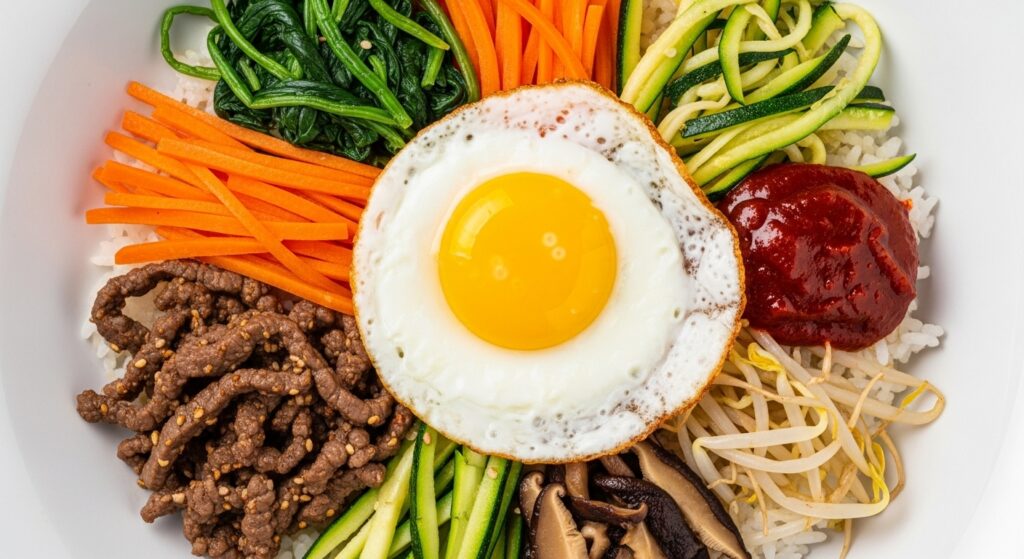
“Pair this stew with Bibimbap for a perfect Korean home-style meal — balance, color, and comfort in one.”
Conclusion
Sundubu jjigae is more than just a spicy tofu stew. It is an explosion of senses — the bubbling sound, the vivid color, the fiery heat, and the silky texture of tofu. For foreigners, it represents both the boldness and the comfort of Korean food, a dish that excites and soothes at the same time.
Whether you try it in a Seoul restaurant, at a Korean eatery abroad, or in your own kitchen, sundubu jjigae will leave a lasting impression. It is a dish that proves food can touch all five senses and still warm the heart.
Sundubu Jjigae (Korean Soft Tofu Stew)
Equipment
- 1 Small pot or stone pot For cooking stew
- 1 Ladle For serving
Ingredients
- 1 pack Korean soft tofu (sundubu) Uncurdled silken tofu
- 100 g Pork (or beef, optional) Thinly sliced
- ½ Onion Sliced
- 2 Green onions Chopped
- 1 Egg Cracked on top before serving
- 2 cups Anchovy or chicken stock Broth base
- 1 tbsp Gochugaru (Korean chili flakes) Adjust to spice level
- 1 tbsp Gochujang (Korean chili paste) Flavor depth
- 1 tbsp Soy sauce Seasoning
- 1 tsp Minced garlic Flavor boost
- 1 tbsp Sesame oil Aroma
- Salt & pepper To taste
Instructions
- Heat a small pot with sesame oil over medium heat.
- Add pork (or beef) and stir-fry with garlic until lightly browned.
- Stir in gochugaru and gochujang, mix well for 1 minute.
- Pour in stock and bring to a boil.
- Add onion and simmer for 5 minutes.
- Gently add soft tofu, breaking into large chunks with a spoon.
- Simmer for another 5 minutes until flavors combine.
- Crack an egg on top, sprinkle with green onions, and serve boiling hot.