A Dish That Signals a Special Day
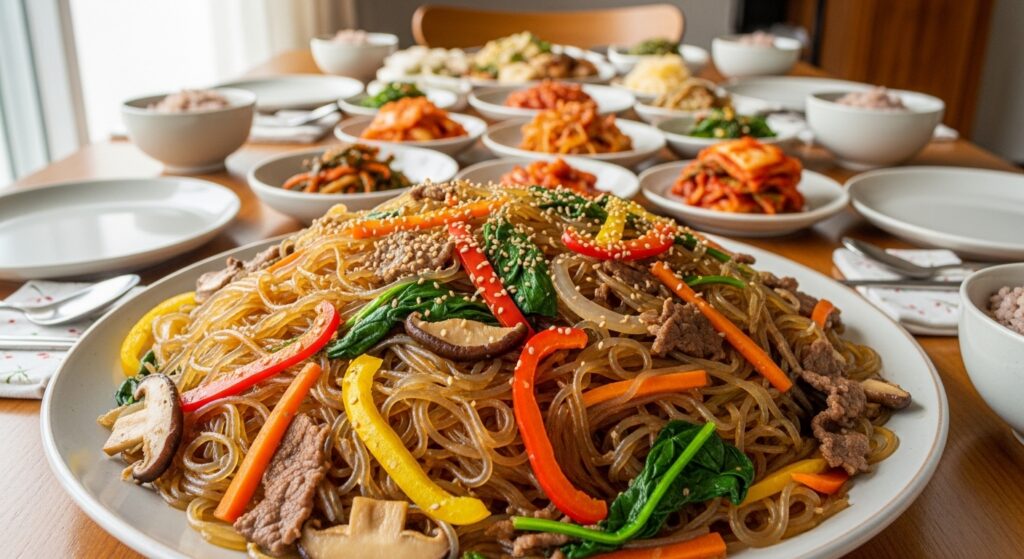
Japchae is one of the most iconic dishes in Korean cuisine, cherished for its colorful appearance and delightful mix of flavors. Traditionally served during holidays, birthdays, and family celebrations, this dish embodies the spirit of abundance and sharing. The word japchae literally translates to “mixed vegetables,” but over time it In Korea, when a large platter of japchae appears on the table, it usually means something special is happening. Birthdays, weddings, holidays, and family reunions — japchae has long been a dish tied to celebration. For foreigners, this connection often comes as a surprise. What looks like a simple glass noodle stir-fry is, in fact, a symbol of festivity and abundance in Korean culture.
From Royal Kitchens to Family Tables
Japchae’s story begins in the royal courts of the Joseon dynasty. It was first created as a savory dish of vegetables and mushrooms prepared for kings and nobles. Over time, glass noodles made from sweet potato starch were added, transforming japchae into the chewy, glossy noodle dish that Koreans love today.
Foreigners often find this history fascinating: a dish once reserved for royalty is now a beloved part of family gatherings and celebrations, accessible to everyone. Eating japchae connects you to centuries of tradition that started in palaces and now lives on in everyday homes.
A Symbol of Abundance and Sharing
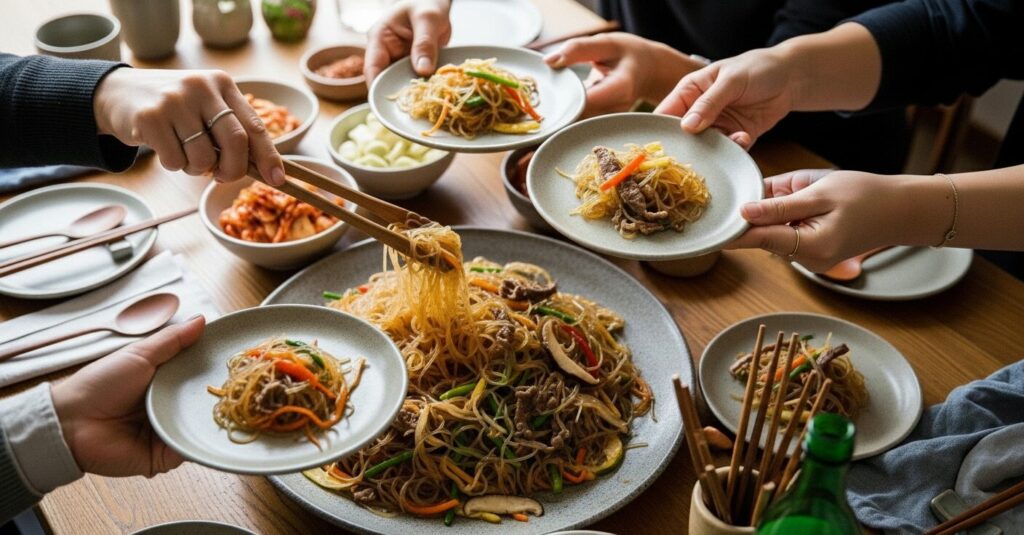
What makes japchae particularly meaningful in celebrations is its generous presentation. A large platter of noodles, vegetables, and meat is placed in the center of the table for everyone to share. The long, translucent noodles symbolize longevity, while the variety of colorful toppings reflects prosperity and joy.
For foreigners, this is one of the most striking cultural aspects of japchae. Unlike individual plates of pasta in Western dining, japchae is meant to be enjoyed communally. Serving it at a party signals hospitality, generosity, and the hope for good fortune.
The Taste of a Party
Beyond symbolism, japchae is also simply delicious. The sweet and savory soy-based sauce, paired with stir-fried vegetables like carrots, spinach, onions, and mushrooms, creates a flavor that is rich yet balanced. Beef or pork often adds depth, though vegetarian versions are just as satisfying.
Foreigners often remark on the unique texture of the glass noodles — chewy, slippery, and different from wheat-based noodles they know. Combined with crisp vegetables, japchae offers a contrast of textures that makes every bite exciting.
Japchae in Modern Celebrations
While japchae was once a dish reserved for major events, today it appears in more casual settings as well. Office parties, school gatherings, and even potlucks often feature japchae as the highlight dish. In fact, many foreigners living in Korea discover japchae not at a restaurant, but at a friend’s birthday or a workplace celebration.
This adaptability makes japchae even more appealing. It can be served warm or cold, as a main or a side, and it fits just as well at a holiday feast as it does at a picnic. For foreigners, this versatility shows the creativity and practicality of Korean cuisine.
For an easy and portable companion to japchae, try Gyeran-mari (Korean Rolled Omelette). Its mild flavor and fluffy texture make it a perfect addition to any lunchbox or picnic spread.
A Dish That Travels Well

Japchae has also gained popularity abroad, appearing in Korean restaurants worldwide. For foreigners outside Korea, ordering japchae is like getting a taste of Korean celebration culture in their own city. Some even describe it as the “party food” of Korean cuisine — approachable, flavorful, and always crowd-pleasing.
👉 If you’d like to try making it yourself, scroll down to the recipe card below for a detailed step-by-step guide.
Conclusion
Japchae is more than just a glass noodle stir-fry. It is a dish that carries the spirit of celebration, abundance, and community. For foreigners, tasting japchae is not only about enjoying its sweet and savory flavors but also about experiencing a tradition that connects families, friends, and generations.
Whether served at a royal banquet centuries ago or at a birthday party today, japchae continues to bring people together. It proves that food is not just nourishment but also a way to celebrate life’s important moments.
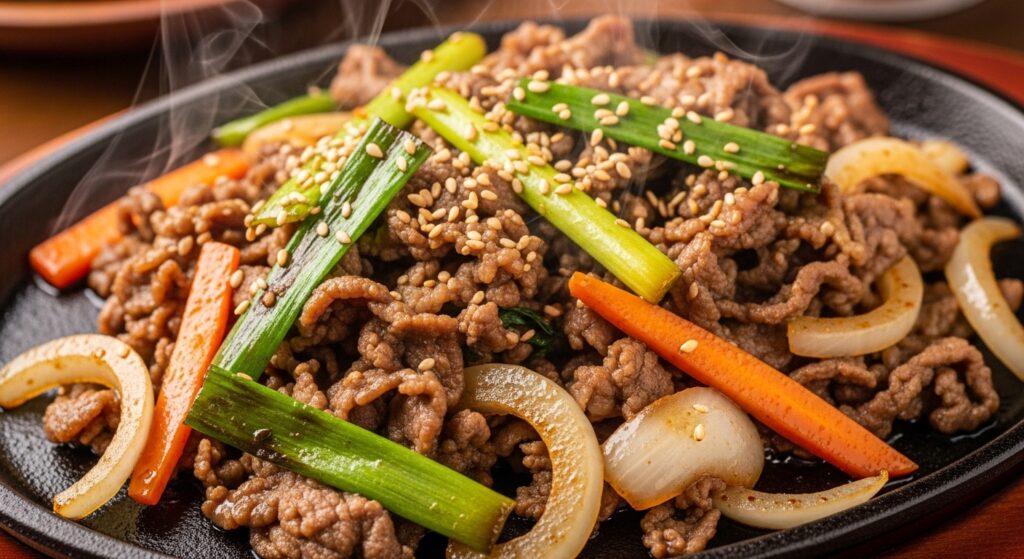
“If you love savory-sweet harmony in Korean cooking, check out my Bulgogi recipe too — the perfect match for glass noodles.”
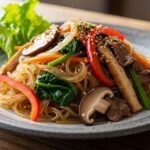
Korean Japchae (Glass Noodle Stir-fry)
Equipment
- 1 Large pot For boiling glass noodles
- 1 Frying pan or wok For stir-frying ingredients
- 1 Mixing bowl For combining noodles and sauce
Ingredients
- 200 g Korean glass noodles (dangmyeon) Made from sweet potato starch
- 150 g Beef (sirloin, thinly sliced) Optional, can be skipped for vegetarian
- ½ Onion Thinly sliced
- 1 Carrot Julienned
- ½ Red bell pepper Julienned
- ½ Zucchini Julienned
- 5 Shiitake mushrooms Sliced
- 2 Eggs cooked into thin omelet strips
- 3 tbsp Soy sauce For seasoning
- 1½ tbsp Sugar Sweetness
- 1 tbsp Sesame oil Aroma
- 1 tbsp Sesame seeds Garnish
- Garlic, minced To taste
- Salt & pepper For seasoning
Instructions
- Boil glass noodles according to package instructions. Drain and set aside.
- Stir-fry beef with soy sauce, garlic, and sesame oil until cooked. Set aside.
- Stir-fry vegetables (onion, carrot, zucchini, mushrooms, bell pepper) separately with a little oil and salt.
- Make a thin omelet with the eggs, slice into strips, and set aside.
- In a large mixing bowl, combine noodles, beef, and all vegetables.
- Add soy sauce, sugar, sesame oil, and garlic. Mix well.
- Adjust seasoning with salt and pepper.
- Garnish with sesame seeds and egg strips before serving.